The 4Cs of Diamond Quality: A Deep Dive for Jewelry Professionals
The 4Cs (Cut, Color, Clarity (per GIA's diamond grading standards), Carat) are the universal language of diamond quality, developed by the GIA. For jewelry professionals, understanding the nuances of each C helps you select diamonds that maximize beauty and value for your customers.
SECTION 01Cut: The Most Important C
Cut is the only human-controlled factor and has the greatest impact on a diamond brilliance. A well-cut diamond reflects light internally and disperses it through the table (top), creating sparkle. A poorly cut diamond leaks light through the pavilion (bottom), appearing dark and lifeless.
Cut Grades
| Grade | Light Performance | Price Multiplier | Recommendation |
|---|---|---|---|
| Excellent/Ideal | Maximum brilliance, fire, scintillation | 1.3-1.8x | Best for fine jewelry |
| Very Good | Nearly maximum brilliance | 1.1-1.3x | Excellent value |
| Good | Good brilliance, some light leakage | 0.8-1.1x | Budget option |
| Fair | Noticeable light leakage | 0.5-0.8x | Avoid for fine jewelry |
| Poor | Significant leakage, dark appearance | 0.3-0.6x | Not recommended |
Key Cut Parameters
- Table percentage - 53-63% is ideal; larger tables reduce fire
- Crown angle - 31-37 degrees; steeper crowns increase fire
- Pavilion angle - 40.6-41.8 degrees; critical for light return
- Girdle thickness - Thin to slightly thick; very thin can chip
- Depth percentage - 58-63%; too deep or too shallow leaks light
- Polish and symmetry - Affect light performance; Excellent/Very Good recommended
SECTION 02Color: The D-Z Scale
Diamond color is graded from D (colorless) to Z (light yellow/brown). The difference between adjacent grades is subtle to the untrained eye but significant in price. For most settings, the optimal value lies in the near-colorless range (G-I), where color is invisible when set.
| Grade | Description | Visibility (face-up) | Price Multiplier |
|---|---|---|---|
| D-F | Colorless | No visible color | 1.5-2.5x |
| G-I | Near-colorless | Invisible when set | 1.0-1.5x |
| J-K | Faint yellow | Slightly visible in large stones | 0.7-1.0x |
| L-M | Very light yellow | Noticeable | 0.4-0.7x |
| N-Z | Light yellow/brown | Clearly visible | 0.2-0.5x |
Fancy color diamonds (yellow, pink, blue) are graded on a separate scale and can command premium prices, especially for vivid pink and blue.
SECTION 03Clarity: Inclusions and Blemishes
Clarity measures internal inclusions and external blemishes. The GIA scale ranges from Flawless (FL) to Included (I3). Most diamonds in commercial jewelry fall in the VS to SI range, where inclusions are not visible to the naked eye.
| Grade | Description | Eye-Clean? | Price Multiplier |
|---|---|---|---|
| FL/IF | No inclusions/blemishes under 10x | Yes | 2-4x |
| VVS1-VVS2 | Minute inclusions, very difficult to see | Yes | 1.5-2x |
| VS1-VS2 | Minor inclusions, difficult to see | Yes | 1.2-1.5x |
| SI1-SI2 | Noticeable under 10x | Usually yes | 0.8-1.2x |
| I1-I3 | Inclusions visible to naked eye | No | 0.3-0.7x |
For value, SI1-SI2 diamonds offer the best balance - they are eye-clean (inclusions invisible without magnification) but cost 30-50% less than VS grades. The key is ensuring inclusions are not visible face-up and do not threaten structural integrity.
SECTION 04Carat: Weight, Not Size
Carat measures weight (1 carat = 0.2 grams), not physical size. Two diamonds of the same carat weight can appear different sizes depending on cut proportions. Price per carat increases exponentially at magic sizes (0.50, 0.75, 1.00, 1.50, 2.00ct) due to consumer demand.
Value tip: A 0.95ct diamond costs 15-25% less than a 1.00ct diamond but appears virtually identical to the naked eye. Similarly, a well-cut 0.90ct can face-up larger than a poorly cut 1.00ct.
SECTION 05Optimal Value Combinations
| Tier | Cut | Color | Clarity | Why |
|---|---|---|---|---|
| Entry | Good | J-K | SI2-I1 | Maximum size for budget |
| Value | Very Good | G-H | SI1 | Eye-clean, brilliant, affordable |
| Premium | Excellent | F-G | VS2 | Fine jewelry standard |
| Luxury | Excellent/Ideal | D-E | VVS+ | Investment/bridal premium |
SECTION 06Professional Sourcing Tips
- Always prioritize cut grade over all other factors - a well-cut lower-color diamond outsparkles a poorly cut D-color diamond
- For white metal settings, G-H color is optimal (color invisible); for yellow gold, I-J works well
- SI1-SI2 offers the best clarity value - always inspect face-up to ensure eye-clean
- Buy certified diamonds (GIA, IGI, AGS) with laser inscriptions for traceability
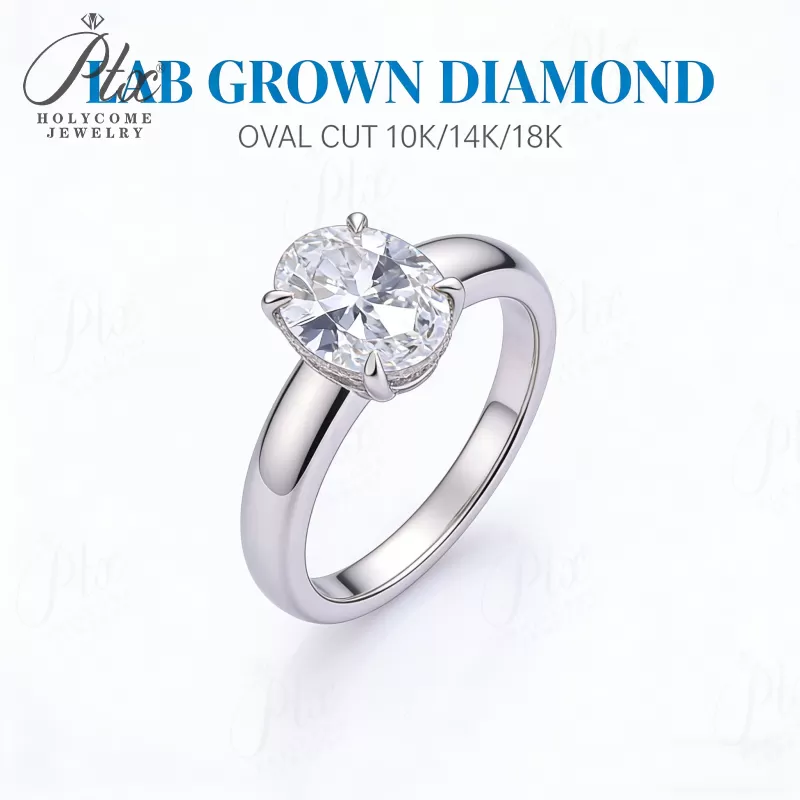
- Consider lab-grown diamonds for 70-85% savings with identical physical properties
- Use mm dimensions, not just carat weight, when comparing stone sizes
SECTION 07Frequently Asked Questions
Which of the 4Cs matters most?
Cut has the greatest impact on a diamond's beauty and brilliance. A well-cut diamond with lower color/clarity will outsparkle a poorly cut diamond with perfect color/clarity. Always prioritize cut grade. For value, choose Very Good or Excellent cut, G-H color, and SI1 clarity - this combination is eye-clean and brilliant at a reasonable price.
What is the best value diamond grade?
For most jewelry, the best value combination is: Very Good or Excellent cut, G-H color, SI1 clarity. This diamond is eye-clean (inclusions invisible without magnification), brilliant, and costs 30-50% less than premium grades (D-F color, VS+ clarity) with no visible difference to the naked eye.
Is an SI diamond eye-clean?
Most SI1 and many SI2 diamonds are eye-clean, meaning inclusions are not visible without 10x magnification. However, this depends on inclusion type, size, and location. Always inspect SI diamonds face-up before purchasing. A well-placed SI1 can look better than a poorly placed VS2. Reputable suppliers provide clarity plots.
Why is a 1-carat diamond more than twice the price of a half-carat?
Diamond pricing increases exponentially at 'magic sizes' (0.50, 0.75, 1.00, 1.50, 2.00ct) due to consumer demand and rarity. A 1-carat diamond costs 2-3x more than a 0.5-carat, not 2x, because larger rough crystals are rarer. Buying slightly below magic sizes (0.95ct, 1.45ct) saves 15-25% with no visible size difference.
More expert guides at HOLYCOME. Wholesale: service@holycome.com.
SECTION 08Related Articles
- Jewelry Metal Alloys: Understanding Gold, Silver, and Platinum Compositions
- Gemstone Heat Treatment Explained: Why Stones Are Heated
Related reading: How to Clean Diamond and Moissanite Jewelry at Home, Jewelry Quality Control: A Manufacturer's Checklist for Consistency, Wholesale Jewelry Quality Control: AQL Standards and Inspection Guide.
Frequently Asked Questions
Which of the 4Cs matters most?
What is the best value diamond grade?
Is an SI diamond eye-clean?
Why is a 1-carat diamond more than twice the price of a half-carat?
Looking for Wholesale Jewelry?
Wuzhou HengliLai Jewelry Co., Ltd. - Professional gemstone and jewelry manufacturer in Wuzhou, China. OEM/ODM services, factory-direct pricing, low MOQ.
Contact on WhatsApp service@holycome.com