Emerald vs Moissanite: Color and Durability Compared
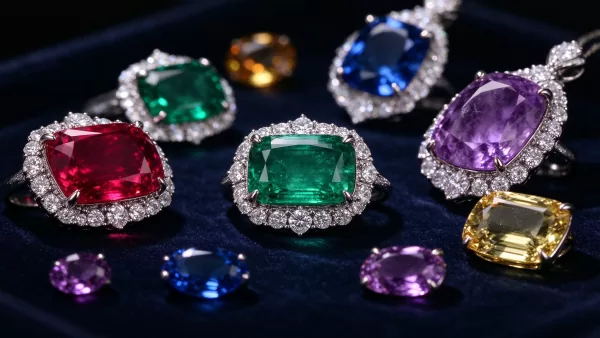
A buyer ordering a green gem parcel for a spring collection usually faces one recurring question: stock natural emerald, or lean on lab-created moissanite finished to a green body color? Both read as vivid green on a model, but they fail in the field for opposite reasons. Emerald chips on the bench; green moissanite looks flat under certain lighting. This comparison breaks down color and durability so the buying decision matches the end use rather than the showroom sample.
SECTION 01Color: saturation, tone and how each is produced
Natural emerald gets its green from trace chromium and sometimes vanadium in the beryl lattice. The trade grades emerald by hue, saturation and tone; the most sought-after material sits in the bluish-green to pure green range at roughly 70-80 percent saturation. Colombian material tends toward a slightly bluish green, Zambian toward a deeper, often slightly grayish green. Green moissanite, by contrast, starts colorless and is either cut from boule grown with trace elements or finished with a thin-film treatment. The green is usually even across the stone, but it can read as a yellow-green or teal rather than the saturated grass green buyers expect from fine emerald.
For a retail display, the difference shows under 5500K daylight-balanced bulbs. Emerald shifts in saturation as the angle changes because its inclusions scatter light; treated green moissanite stays uniform. Wholesale buyers who photograph both under the same light box report that emerald reads richer at 1 to 2 ct, while green moissanite competes visually at 3 ct and above, where a clean emerald would price out most consumers.
SECTION 02Durability: Mohs, toughness and chipping risk
On the Mohs scale, emerald sits at 7.5 to 8, and moissanite at 9.25. Those numbers alone overstate emerald's weakness. The real durability gap is toughness. Emerald is a brittle stone with three directions of cleavage and a high density of surface-reaching fractures, which is why most material is oiled. A 1 mm girdle knock on an emerald ring can open a feather that runs to the culet; the same knock on moissanite leaves no mark. Moissanite's 9.25 hardness means it resists scratching from dust (quartz at 7) and from contact with other jewelry loose in a tray.
The practical split: emerald is an occasion-wear stone. Trade buyers stock emerald for pendants, earrings and halo rings that see light impact, and price them accordingly. Moissanite is a daily-wear stone that survives hand-washing, knocks against desks, and long hours on the finger. If a client asks for an emerald look in a wedding band, the honest answer is body-color green moissanite or a coated emerald set in a bezel, not a prong-set emerald worn daily.
SECTION 03Maintenance and after-sales risk
Most emerald on the market is oiled or resin-filled to reduce the visibility of fractures. That filling dries out over 2 to 5 years and must be re-done; it also means emerald cannot go in ultrasonic cleaners. Moissanite needs no filling, no re-oiling, and is ultrasonic-safe. For a wholesale buyer, the after-sales difference is the return rate: emerald parcels carry a higher rate of "the stone looks cloudy now" complaints, while moissanite parcels almost never come back for durability reasons. See our note on ultrasonic and steam safety for moissanite before bundling cleaning instructions.
Color stability is the other maintenance line. Green moissanite coatings can wear at the culet over years of abrasion, so ask the supplier whether the green is body-color (grown into the boule) or surface-treated. Body-color is stable; surface coating must be disclosed in the listing. Moissanite's optical properties are documented on Wikipedia's moissanite entry, and emerald grading conventions are summarized by GIA's colored-stone resources.
SECTION 04Which to stock, by category
Stock natural emerald for high-jewelry pendants, collector earrings, and bridal pieces marketed as fine color stones. Stock green moissanite for everyday stacking rings, first gifts, and price-sensitive bridal lines where a 3 ct green center should retail under a few hundred dollars. Tie your assortment together with our moissanite buying guide and emerald selection notes so customers land on the right tier. For how price moves between these two categories, see how mine-to-retail pricing works.
SECTION 05Cost per carat and how fast each turns over
Price and inventory behavior are where the two materials diverge most for a resale lineup. Natural emeralds carry a high per-carat cost tied to rough rarity, mining geography and visible inclusions, and each stone is one of a kind. Green moissanite sells at a far lower per-carat level, keeps a stable body color and can be ordered in calibrated sizes and matched pairs, which makes it easier to keep repeat styles in stock.
Inventory turnover should be matched to the customer segment. Emeralds suit buyers who want a rare natural stone and are willing to pay for character and provenance; they move slowly and tie up more cash per piece. Moissanite suits everyday wear, gift lines and buyers who want a green look at a comfortable price, and it can be restocked in smaller, frequent lots. Wholesale buyers should size the first order to the segment they actually serve rather than stocking both at the same depth.
| Aspect | Natural emerald | Green moissanite |
|---|---|---|
| Per-carat price | High, by origin and clarity | Lower and more consistent |
| Inclusions | Typical, expected in the stone | Minimal, clean to the eye |
| Calibrated stock | Limited matching | Matched pairs and sizes available |
| Stocking cash per piece | Higher | Lower |
SECTION 06Setting and care differences at the bench
At the workshop, emeralds and moissanite call for different handling. Emeralds are brittle and often treated with oil or resin to fill surface-reaching fissures; that treatment must be disclosed where required, and heat or steam can dry or damage it. Moissanite tolerates regular production setting and cleaning more easily, which suits batch-made silver and gold lines.
Cleaning advice should reflect the same split. Emerald pieces should avoid ultrasonic and steam cleaning unless a jeweler confirms the stone is stable, and should be wiped with a soft cloth and mild soapy water. Moissanite can be cleaned with standard warm soapy water and a soft brush, and re-polished when the face dulls. When you write product care notes for a retail page, name the stone type first so customers do not treat an emerald like a durable lab stone.
- Inspect emerald settings after impact; brittle stones hide cracks that can spread later.
- Keep resin or oil-treated emeralds away from solvents that can lift the filler.
- Confirm edge protection on emerald rings worn daily, since exposed corners chip first.
SECTION 07Setting customer expectations before the sale
Clear expectations reduce returns on both sides of this comparison. Natural emeralds are sold with visible inclusions that are part of their character, and buyers who expect a perfectly clean green stone will be disappointed. Green moissanite is a synthesized body color that stays even and clean to the eye, which suits buyers who want a consistent look rather than a natural rarity.
Before recommending either, ask what the piece is for: a heritage or investment-style purchase, an everyday ring, a gift, or a bridal line. Budget and wear case point in different directions, and matching the stone to that purpose avoids a mismatch after delivery. On a retail page, state the material type, treatment status and care limits up front, so customers are not comparing an oil-treated natural emerald against a durable lab stone on the same terms.
- Disclose any oil or resin filler on emeralds where required by market rules.
- State that green moissanite is lab-made rather than a natural mined stone.
- Match the recommendation to how often and how hard the piece will be worn.
SECTION 08FAQ
Is emerald or moissanite harder?
Moissanite is harder at 9.25 on Mohs versus 7.5 to 8 for emerald, but toughness, not hardness, is the reason emerald chips more easily.
Does green moissanite hold its color?
Body-color green boule is stable. Surface-treated or coated green moissanite can thin at the culet; ask the supplier which method was used and disclose it.
Can I set emerald in an engagement ring?
It is possible but brittle; trade buyers usually recommend a protective bezel and reserve emerald for pendants or earrings in a daily-wear line.
Why is larger green jewelry cheaper in moissanite?
Emerald price climbs steeply above 2 ct because clean rough is rare; moissanite is lab-grown, so a 3 ct green stone costs a fraction of a comparable emerald.
Wholesale note: gemwco.com supplies both natural emerald parcels and body-color green moissanite in matched sizes, so buyers can build a tiered green-gem line without switching factories.
Related reading: 925 Silver vs Stainless Steel: Durability, Price, and Style Compared, Moissanite vs White Sapphire: Hardness and Fire Compared, Gemstone Engagement Ring Guide: Sapphire, Emerald, Ruby, and Alternati.
Looking for Wholesale Jewelry?
Wuzhou HengliLai Jewelry Co., Ltd. - Professional gemstone and jewelry manufacturer in Wuzhou, China. OEM/ODM services, factory-direct pricing, low MOQ.
Contact on WhatsApp service@holycome.com