Buying Moissanite Wholesale: MOQ, GRA Papers and Factory Audit Checklist
Buying moissanite at wholesale is not the same as buying diamond wholesale. GIA does not grade moissanite, price grids move weekly, and MOQ terms differ by factory. Buyers who show up with a clear paperwork and audit checklist avoid the two most common problems: receiving cloudy "D color" stock, and receiving unpapered stones that cannot be sold into regulated markets. Here is the checklist B2B buyers use.
SECTION 01MOQ and lot structure
Typical factory terms: MOQ 10-50 pieces per size/grade for calibrated round brilliant, or 50-100 carats mixed fancy shapes. Sample orders run 1-3 pieces at retail-ish price to confirm color and fire before committing. Lead time is usually 7-21 days for stocked sizes and 30-45 days for custom cuts. Payment terms are commonly 30% deposit, 70% before shipment by T/T, with PayPal or trade-assurance available for first orders.
SECTION 02GRA papers and inscriptions
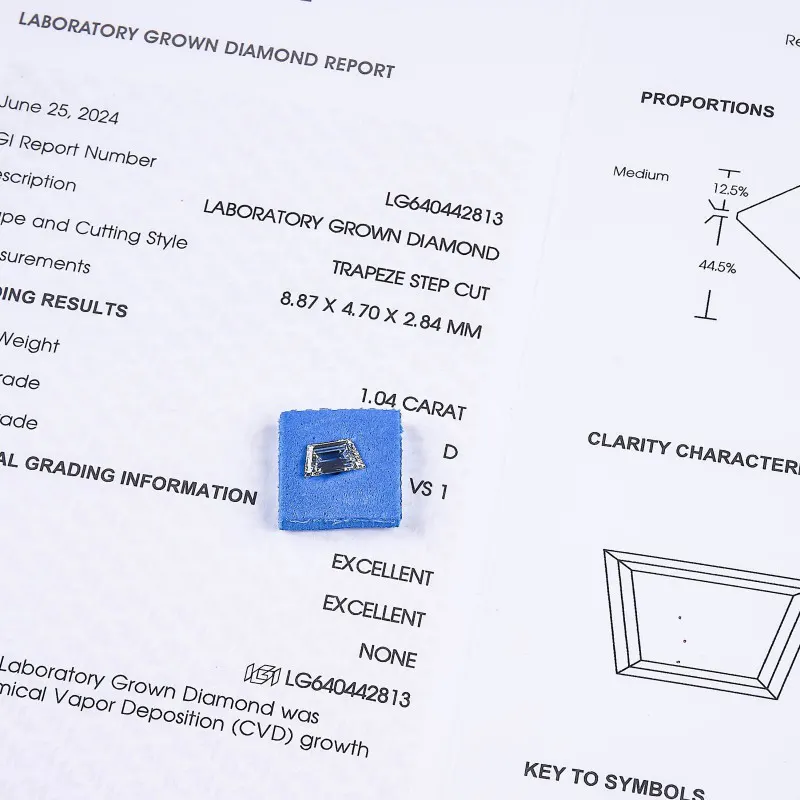
Because GIA declines to grade moissanite, the trade relies on GRA (Gemological Research Association) reports, plus in-house lab sheets. A legitimate GRA report lists carat, color (DEF / GHI / JKL), clarity (VVS / VS / SI), cut grade, and measurements, with a matching laser inscription on the girdle. Verify the report number in the GRA online checker before accepting. Ask for Charles & Colvard origin documentation if marketing the original branded material; unbranded Chinese-grown moissanite is fine for value lines but must not be sold under a legacy brand name.
SECTION 03Factory audit checklist
Before committing over $10k, request: ISO 9001 certificate, BSCI or Sedex social-audit report, REACH nickel-release test for plated settings, and an in-house lab certification sample. Walk the floor (or receive video walkthrough) of the cutting room, the laser-inscription station, and the packing area. Sample 5% of the lot under 10x loupe for doubling, girdle etching matching report, and edge chips. Reject any parcel where more than 1 of 20 sampled stones mismatches the paper.
SECTION 04Pricing and margin floors
2026 reference: DE VVS round moissanite loose runs $25-$80 per carat factory depending on size (1 ct vs 3 ct), with DEF VS at the lower end. Retail markup for solitaire-set moissanite is typically 3-5x loose price. Build your pricing sheet around loose cost plus setting, then add the margin. Sourcing context is in our moissanite guide, paperwork rules in certification overview, and market context in lab-grown versus natural. Regulatory reference: EU REACH annex and ECHA compliance database.
SECTION 05Sample inspection protocol
Before placing a repeat order, inspect the sample lot against four benchmarks. First, color: compare the sample side-by-side with a known DEF diamond or moissanite master stone under daylight; any visible yellow tint outside the declared grade is a reject. Second, fire: tilt the stone under a 6,500K ring light and confirm rainbow flashes appear evenly, not concentrated under the table. Third, edge chips: scan every facet edge under 10x; chips on the pavilion girdle indicate rough handling in transport. Fourth, girdle inscription: confirm the GRA number is legible, not half-erased. Document each sample with three photos and keep the file against future shipments.
SECTION 06Building a first sample lot that fits your lineup
The first sample lot should be planned around the categories you actually sell, not around whichever stones a supplier pushes. Most buyers mix studs, rings, pendants and loose stones in the first round, then add necklaces and bands once the core styles land. For each category, decide the popular carat sizes and shapes that match your customers' preference, and ask for matched pairs where the piece is worn as a set.
With a MOQ from five pieces per style, mixed-style orders let you spread the minimum across several designs instead of tying up stock in one item. Use the sample round to compare color level, cut symmetry, prong fit and finish across styles, and to photograph each piece under consistent light. Approve the samples against a written spec before placing any bulk order, and keep the approved sample as the reference for future reorders.
- Stock the round and oval shapes that sell fastest first; reserve fancy cuts for a later, smaller test.
- Order loose stones in the calibrated sizes your settings accept, so side stones can be replaced without reworking the piece.
- Ask whether custom engraving, metal finish and private-label tags can be repeated on reorders.
SECTION 07Common order disputes and how to prevent them
Most disputes in wholesale jewelry orders come from gaps in written specification rather than bad intent. Color or matching can look different under store light than on the supplier's photos, a pair can arrive with a size or shade mismatch, an edge can chip in transit, plating can be thinner than expected, or the bulk lead time slips. These are easier to prevent than to argue about after delivery.
Before production, confirm the stone size and shape, metal purity and finish, stone grade and paper, and the quantity per style in writing. Request QC photos of finished pieces before dispatch, and agree in advance how defective stones, setting defects or shipping damage will be handled. Keep the approved sample, the spec sheet and the QC photos together so a later comparison has a fixed reference point.
Plan the timeline in stages: sample approval, sampling, bulk production, QC and dispatch, with buffer days built around stone sourcing and plating. A new buyer should start with one or two fast-moving categories, close the sample loop, then expand the lineup once communication and quality on repeat orders are proven.
SECTION 08Questions to ask before the first bulk order
Before a bulk order is released to production, a short written list of confirmed points prevents most later disputes. Confirm the accepted color and clarity look, cut symmetry and matching standard, the certificate body and inscription practice, the plating metal and expected thickness, the base metal purity, and the bulk lead time with any delay terms. Also ask whether the sample fee credits toward the bulk order, how replacements work for defective stones or setting defects, and the usual reorder lead time for the styles that sell.
Record the answers on the same spec sheet that accompanies the order, and keep the approved sample and QC photos as the reference for the next lot. If a point is only discussed by message, put it in writing before production starts. This gives both sides a fixed standard to compare against when the bulk shipment arrives.
- Confirm matched-pair tolerance on earrings and studs before sampling.
- Ask how stone grade is checked and whether certificates follow each parcel.
- Agree in writing on who covers transit damage and setting defects.
SECTION 09FAQ
Does GIA grade moissanite?
No. GIA grades natural and lab-grown diamond. Moissanite is papered by GRA and other independent labs.
What MOQ should a new buyer start with?
Start with a 10-piece sample lot in 1 ct DEF VVS round. Once color and fire match expectations, scale to 50-100 piece lots per size.
How do I know a GRA report is real?
Enter the report number in GRA's online checker and verify the girdle inscription under 10x matches the number on the paper.
Is Chinese-grown moissanite lower quality?
No. Most 2026 moissanite is grown in China to consistent DEF VVS standard. Branded origin matters only if you market the legacy name.
SECTION 10Start with a sample lot, scale with data
Order a 10-piece sample, photograph it under your store lighting, compare to the GRA sheet, and only then commit. The factories that pass the 5% loupe check consistently are the ones worth recurring. This same diligence applies to our broader sourcing playbook.
Wholesale note: gemwco.com ships GRA-papered moissanite from 10-piece sample lots, with factory audit documents, REACH test reports, and report-number verification provided on request for retail private-label programs.
Final reminder: price grids on moissanite move monthly. Lock the quote for seven days in writing, confirm grade and size before the deposit leaves, and never pay 100% upfront to a new factory. Those three rules eliminate the majority of B2B disputes in this category.
One last paperwork point: many retail jurisdictions require lab-grown and simulated stones to be disclosed at point of sale. GRA papers on every shipped stone make that disclosure trivial; unpapered lots invite complaints from downstream retailers who cannot prove what they sold.
Start with one shape and one grade (1 ct round DEF VVS) before branching into ovals, pears, or color tiers. Fancy shapes and lower clarity tiers move half as fast and tie up cash.
Looking for Wholesale Jewelry?
Wuzhou HengliLai Jewelry Co., Ltd. - Professional gemstone and jewelry manufacturer in Wuzhou, China. OEM/ODM services, factory-direct pricing, low MOQ.
Contact on WhatsApp service@holycome.com