Gemstone Knowledge Wholesale: sizing & durability
SECTION 01Why Sizing, Setting, and Durability Decide Your Gemstone Margin
Gemstone Knowledge for wholesale buyers comes down to three practical decisions: the stone size you order, the setting you pair it with, and the durability level your end customers actually need. Get these wrong and you face returns, remakes, and dead inventory. Get them right and you can order with confidence from a 1 piece stock minimum or a 30 piece custom minimum, knowing the finished goods will hold up at retail.
This guide walks through sizing standards, setting options, hardness and toughness ratings, and how each choice affects sampling timelines, quality control, and landed cost. The goal is simple: help you place smaller, smarter orders that sell through.
SECTION 02Sizing: How Buyers Should Spec Stone Dimensions
Sizing is the first decision because it drives everything downstream, from carat weight to setting cost. Loose stones are sold by the carat, so your spec sheet should state both dimensions and weight tolerance. A round cut listed as 6.5 mm will vary slightly between parcels, and your setting order needs to absorb that range.
Calibrated Sizes Versus Free Sizes
Calibrated stones are cut to standard millimeter sizes, which lets you buy settings in advance and match stones to them later. Free-size stones are cheaper per carat but force you to cut each setting to the individual stone. For stock programs built around 1 piece minimums, calibrated sizes reduce fitting risk. For custom work at 30 pieces, free sizes can lower material cost if your factory cuts settings to match.
How Carat Weight Relates to Millimeter Size
Different gemstones have different densities, so a 1 carat sapphire and a 1 carat moissanite will not measure the same across. Moissanite, a lab-created diamond alternative, is lighter per millimeter than corundum, meaning a moissanite of equal diameter weighs less. Price your quotes per piece rather than per carat when size matters more than weight, since that is how your retail customer perceives value.
Tolerance Bands You Should Put in Writing
Ask your supplier to state a tolerance, for example plus or minus 0.1 mm on calibrated rounds. Tighter tolerances mean longer cutting time and higher per-piece pricing. Standard tolerance is fine for most silver and vermeil programs; tight tolerance makes sense for solid gold 10K, 14K, or 18K work where remounting is expensive.
SECTION 03Settings: Matching the Mount to the Stone and the Price Point
The setting determines how much of the stone shows, how much light enters it, and how vulnerable it is to impact. Your metal choice interacts with the setting too: 925 sterling silver is soft enough that aggressive prong work needs reinforcement, while solid gold in 10K, 14K, or 18K holds fine detail better.
Prong Settings
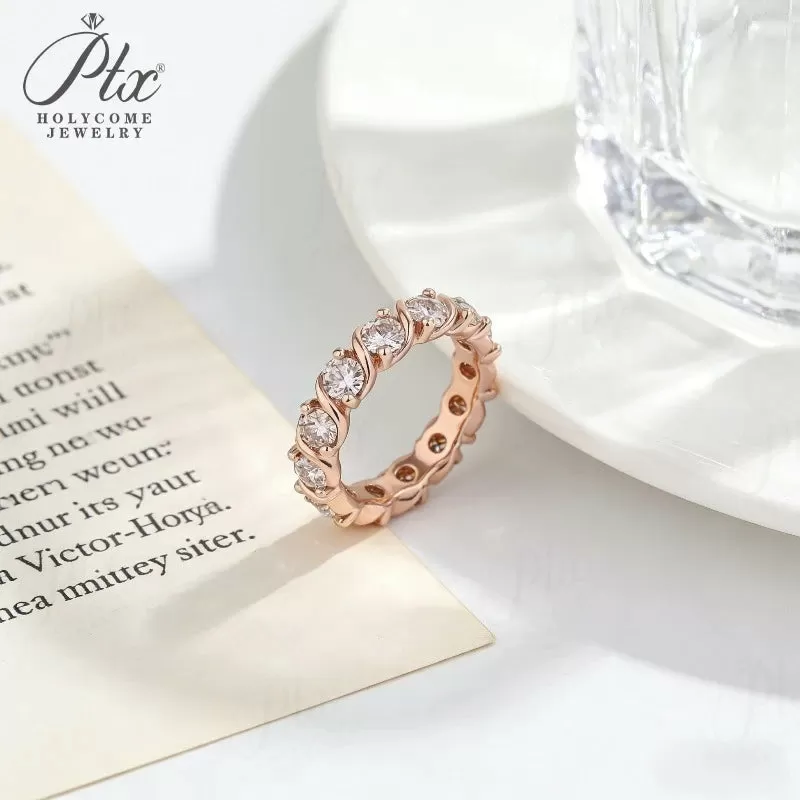
Prongs maximize light entry and are the standard choice for moissanite and colored stones in solitaire styles. Four prongs suit smaller rounds; six prongs add security for larger stones. On 925 sterling silver, request heavier gauge prongs on stones above roughly 2 carats to reduce snagging and bending.
Bezel and Half-Bezel Settings
A bezel wraps the stone edge in metal, protecting it from chips and snags. This suits rings worn daily and lower-hardness stones such as opal or tanzanite. Half-bezels keep more of the stone visible while protecting the two most exposed points.
Pavé and Channel Settings
Pavé and channel work increases labor cost and raises the stakes on quality control. Each small stone is a potential loss point, so confirm your supplier inspects these in-process rather than only at final inspection. Our three-stage QC runs incoming material checks, in-process checks during setting, and a pre-ship AQL inspection on the finished batch.
SECTION 04Durability: Hardness, Toughness, and Real-World Wear
Durability is two separate properties. Hardness measures scratch resistance on the Mohs scale; toughness measures resistance to chipping and breaking. A stone can score high on one and low on the other, so buyers should check both before committing to a design.
The table below summarizes common categories you will quote against:
| Stone category | Mohs hardness | Toughness | Best setting match |
|---|---|---|---|
| Moissanite | About 9 to 9.5 | Good | Prong or bezel |
| Sapphire and ruby | 9 | Good | Prong, pavé |
| Emerald | 7.5 to 8 | Fragile | Bezel, protective |
| Opal | 5.5 to 6.5 | Fragile | Bezel, closed back |
| Tanzanite | 6 to 7 | Fragile | Bezel, low profile |
Use the table as a starting point, then match stone choice to the product category. Earrings and pendants take less abuse than rings, so softer stones can work there. Rings for daily wear should favor hardness above 8 or a protective bezel design.
Matching Durability to Your Customer
Define the wear scenario before ordering. Fashion jewelry worn occasionally can use a wider range of stones. Bridal and everyday lines need harder stones and reinforced settings. This decision should be documented on your purchase order so the factory designs to it.
Certification for Graded Stones
For stones sold with grading documentation, request GRA or IGI papers with the shipment. These reports describe the stone's characteristics and support your own product listings. Confirm at the sampling stage which items will carry papers, since that affects both production lead time and per-piece pricing.
Metal Durability Notes
Gold plated finishes wear fastest and suit low-price fashion lines. Gold vermeil, which is gold plated over 925 sterling silver, offers a middle tier. Solid gold in 10K, 14K, or 18K provides the longest service life and justifies higher-grade stones. Never market plated or vermeil pieces as solid gold; accurate metal naming protects your listings and reduces disputes.
SECTION 05How Sizing and Setting Choices Affect Lead Times
Sampling takes 7 to 10 days, and bulk production runs 15 to 25 days after you approve the sample. Complex settings extend both stages. A six-prong solitaire samples faster than full pavé because fewer stones are set by hand. If your line needs pavé, budget the upper end of the production window and plan your reorder cycle around it.
Shipping adds the final variable. DDP delivery to the US takes 5 to 8 days, with duties handled before the goods reach you. When you build a launch calendar, add the sample window, the production window, and the shipping window, then hold a buffer for the pre-ship AQL inspection findings if any units need rework.
SECTION 06Pricing and Payment Structure for Stone-Based Orders
Pricing is quoted per piece or per carat depending on the item. Loose stones and graded parcels price per carat; finished jewelry prices per piece and rolls the metal, labor, and setting work into one number. Compare quotes on the same basis before deciding, since a lower per-carat price with heavier settings can cost more per finished unit.
Payment terms follow a standard structure: T/T with a 30 percent deposit and the 70 percent balance before shipment. Sample orders can be paid through PayPal, which keeps the upfront commitment small while you test sizing and setting choices. This split lets you validate a design at 1 piece before committing to a 30 piece custom run.
SECTION 07Building a Stone Spec Sheet Your Factory Can Quote Accurately
A clear spec sheet shortens sampling and reduces remakes. Include the following for every SKU:
- Stone type, calibrated millimeter size, and carat weight tolerance
- Metal specification: 925 sterling silver, gold vermeil, gold plated, or solid gold 10K, 14K, or 18K
- Setting type and prong gauge or bezel height
- Whether GRA or IGI papers are required
- Target wear scenario so durability requirements are explicit
Send this sheet with your sample request and you will get a usable sample within the 7 to 10 day window instead of a round of clarification emails. Buyers who document specs this way typically move from sample to bulk approval in one cycle.
Order Terms for Wholesale Buyers
MOQ is 1 piece for stock styles and 30 pieces for custom work, and loose stones are sold by the carat. Sampling takes 7 to 10 days, and bulk production runs 15 to 25 days after the sample is approved. Pricing is quoted per piece or per carat depending on the item. Payment is T/T with a 30% deposit and the 70% balance before shipment, and PayPal is accepted for sample orders.
SECTION 08Frequently Asked Questions
What is the minimum order for a new gemstone style?
Stock styles have a 1 piece minimum, so you can test sizing and setting choices before scaling. Custom work requires 30 pieces. Loose stones are sold by the carat and are not subject to piece minimums.
How long does the full order cycle take?
Sampling takes 7 to 10 days, and bulk production runs 15 to 25 days after sample approval. DDP shipping to the US then takes 5 to 8 days. Complex settings such as pavé tend toward the longer end of production.
Which settings protect fragile stones like opal or emerald?
Bezel and half-bezel settings shield the stone edge and reduce chipping risk. Closed-back bezels also protect opals from impact. Avoid sharp prong exposure on stones rated fragile for toughness.
Do graded stones come with documentation?
Yes, stones sold as graded can ship with GRA or IGI papers. Confirm this requirement at the sampling stage so it is included in the quote and production plan. The papers support your retail listings and customer communication.
How is durability different from hardness?
Hardness measures scratch resistance on the Mohs scale, while toughness measures resistance to chips and breaks. Moissanite, a lab-created diamond alternative, rates high on both. Emerald and opal score moderately on hardness but are fragile in toughness, so they need protective settings.
Start Your Stone Program With a Sample
Sizing, setting, and durability decisions are easiest to make with a sample in hand and a spec sheet behind it. Browse current stock styles on our wholesale gemstone jewelry catalog, review our production and inspection process on the about our factory page, or send your spec sheet through the contact page to request a quote and a 7 to 10 day sample.
Sources: Grading references: GIA gem education and GIA laboratory information.
Frequently Asked Questions
What is the minimum order for a new gemstone style?
How long does the full order cycle take?
Which settings protect fragile stones like opal or emerald?
Do graded stones come with documentation?
How is durability different from hardness?
Start Your Stone Program With a Sample
Looking for Wholesale Jewelry?
Wuzhou HengliLai Jewelry Co., Ltd. - Professional gemstone and jewelry manufacturer in Wuzhou, China. OEM/ODM services, factory-direct pricing, low MOQ.
Contact on WhatsApp service@holycome.com