Buying Guides: Where Comes From: The Supply Chain Behind the Price - HOLYCOME
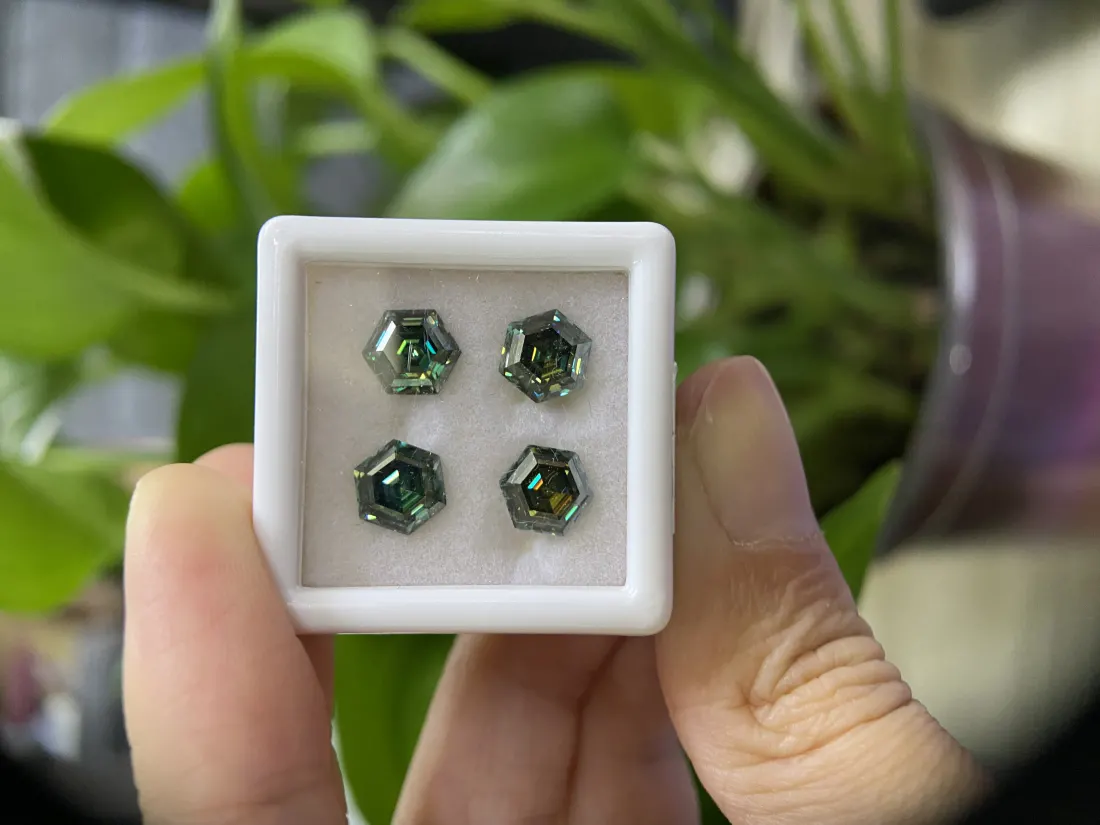
A Buying Guides price carries four supply steps: alloy, stone, casting and finishing. Knowing which step a supplier controls explains both the price and the risk.
SECTION 01Step one and two: alloy and stone
Alloy comes from a mill, usually in sheet, grain or tube. Stones come from cutting centers, and the cutting quality is set there, not at the setting bench. On Buying Guides, a cheap stone usually means a cheaper cut, not a cheaper rough.
Ask which mill and which cutting source. The answer tells you what can change without notice.
Compare five cost lines instead of two totals. Metal, stone, labour, finishing and overhead explain a gap that a single number hides.
SECTION 02Step three: casting
Casting is either in-house or subcontracted. In-house means control over the alloy mix and the queue; subcontracted means a shared queue and a longer lead time in peak.
On Buying Guides, the casting arrangement is the single best predictor of peak-season reliability.
| Step | Who controls | Risk if opaque |
|---|---|---|
| Alloy | Mill | Purity drift |
| Stone | Cutting center | Grade change |
| Casting | Factory or sub | Peak delay |
| Finishing | In-house or shop | Colour variation |
| Plating | Plating shop | Thickness drift |
Read the table as a checklist rather than a recommendation. The right row depends on the price band, the wear pattern and the channel you sell into.
Put the gram weight per size on the PO, not an average. Cost and feel both follow weight, and an average hides the size that breaks the margin.
SECTION 03Step four: finishing and plating
Plating can be in-house or a plating shop. A plating shop serves many clients and its bath chemistry drifts; that drift is the source of colour variation between lots.
Ask for a colour sample per lot, and for the bath maintenance record if the volume justifies it.
SECTION 04Reading the chain in a quote
A quote that names the mill, the stone source, the casting arrangement and the plating shop is a quote you can audit. A quote that names none of them is a price with no chain behind it.
On Buying Guides, that transparency is worth more than a few percent on the unit price.
Capacity is the constraint that price cannot solve. In peak season a cheaper factory with no slot is more expensive than a dearer one with a date.
SECTION 05What to check before the order
Run the five checks below in order. The first two protect the money, the last three protect the launch date.
- Ask which mill supplies the alloy.
- Ask where the stones are cut.
- Ask whether casting is in-house.
- Ask for a colour sample per lot.
- Audit the chain, not only the price.
If a supplier cannot answer three of the five, treat the quote as a starting point rather than a plan. Ask again in writing and keep the answer with the PO.
SECTION 06Frequently Asked Questions
Why does Buying Guides price vary between factories?
Different alloy sources, cutting quality and casting arrangements. The chain explains the price more than the labor rate does.
Does in-house casting matter?
In peak season, yes. It decides whether your order holds its slot.
Why does colour drift between lots?
Usually plating bath chemistry. A sample per lot catches it early.
Can I audit a supply chain?
At the level of names: mill, cutting source, casting, plating shop. Four answers make a quote auditable.
What is the biggest hidden risk?
A stone source change without notice. The lot looks similar and grades differently.
Should I buy stock or made to order?
Stock for the top three designs, made to order for the tail. Stock cover is a calculation from sell-through and lead time.
Send the Buying Guides spec. We return the four-step supply chain with the mill, stone source, casting and plating arrangement named. See the full range at Buying Guides and HOLYCOME.
The short version: specify the number, seal the sample, inspect against both. Everything else is negotiation.
Looking for Wholesale Jewelry?
Wuzhou HengliLai Jewelry Co., Ltd. - Professional gemstone and jewelry manufacturer in Wuzhou, China. OEM/ODM services, factory-direct pricing, low MOQ.
Contact on WhatsApp service@holycome.com